
The cutting tools and abrasion have existed since ancient times. Metal became a popular material of choice for the manufacture of cutting tools during the Bronze Age 4,700 years ago.
When carpentry, masonry, locksmith, etc. works are carried out. and in different industrial processes, almost all the pieces at some moment of their elaboration undergo some change process. In order to carry out this modification , cutting and abrasion tools are needed . These types of tools are capable of transforming different materials by applying a series of forces. In this process of transformation the material worked acquires a different form and generally a waste or "chip" occurs.
Read more also miter saw dust collection
Read more also miter saw dust collection
Cutting Tools
By definition, cutting tools can refer to any object used to remove unwanted or excess material from a workpiece by means of its shear deformation.
The cutting tools have been used in machine shops metal since the end of the nineteenth century. Today, manufacturers continue to evolve these mechanisms to make them more efficient in the industry. What began as tools that were tedious and strenuous to use, are now high-tech instruments that can be found in all toolboxes and machine shops.
The cutting tools come into contact with the raw material, cut, remove debris and chips from the material and help create the final piece. For a cutting tool to function properly, it must be able to withstand the heat that is generated during the cutting process due to friction and be harder compared to the material being cut.
Cutting tools can be classified as single or multipoint cutting tools. The cutting tools of a single point , such as scissors, used in turning operations, shaped or similar operations. While multi-point cutting tools include milling, drilling or grinding tools.
Since there are different cutting tools that adapt to various types of cutting, the tools must have a specific geometry. In this way they offer free space angles to prevent the entire cutting tool from coming into contact with the material to be cut, but only the edge making contact with the material.
Types of Cutting Tools
There are different types of cutting tools present today, each with different purposes and applications. One of the main differentiation factors between this kind of tools is the material with which the cutting tool is made. As we said, the tool must be harder than the material on which it will work.
The material chosen for a particular cutting tool depends on the material to be machined, the type of machining, the quantity and quality of production.
Thus, depending on the material used , the cutting tools are classified into:
Carbon Steel Tools
They are low cost metal cutting tools used for low speed machining operation. The steel carbon is a material having good machinability. However, it loses its hardness quickly at a temperature of approximately 250 ° C. Therefore, it cannot be used at high temperatures.
The tools carbon steel used in twist drills, milling tools, turning tools and shaped. They are used to cut soft materials such as brass, aluminum, magnesium, etc.
High Speed Steel Tool (HSS)
This is a type of high carbon steel with a significant amount of alloy elements, such as tungsten, molybdenum, chrome, etc. This improves the hardenability, hardness and wear resistance of the cutting tool. It also gives a higher metal removal rate. It loses its hardness at a moderate temperature around 650 ° C. Therefore, a coolant should be used to increase the life of the tool. The tool can be used many times by sharpening it again.
High speed steel tools are used in drills, mills, single point tools, drill bits, etc.
CEMENTED CARBIDE AND CERMET TOOLS
The cutting tools of cemented carbide are extremely harsh. They can withstand cutting operations at very high speed. The carbide tool does not lose its hardness up to 1000 ° C.
The cemented carbide cutting tool is produced using the powder metallurgy technique. It is made with tungsten, tantalum and cobalt titanium carbide as a binder (when the binder is nickel or molybdenum, then it is called cermet)
Tools that have high cobalt are used for rough cutting, while low cobalt tools are used for finishing operations.
Ceramic Tools
The most common ceramic materials are aluminum oxide and silicon nitride. These tools are made from ceramic powder, compacted in the form of insertion and sintered at high temperature.
The cutting tools of ceramics are chemically inert and have high corrosion resistance. They have a high compressive strength. They are stable up to the temperature of 1800 ° C. They are ten times faster than those of HSS. The friction between the face of the tool and the chip is very low and has a low thermal conductivity. Generally, no refrigerant is required when using them. They provide an excellent surface finish.
Diamond Tools
Diamond is the hardest material known and is also expensive. It has very high thermal conductivity and melting point. The cutting tools diamond offer excellent abrasion resistance, low friction coefficient and low thermal expansion. They are used in the machining of very hard materials such as carbides, nitrides, glass, etc. Diamond tools provide a good surface finish and dimensional accuracy. They are not recommended for machining steel.
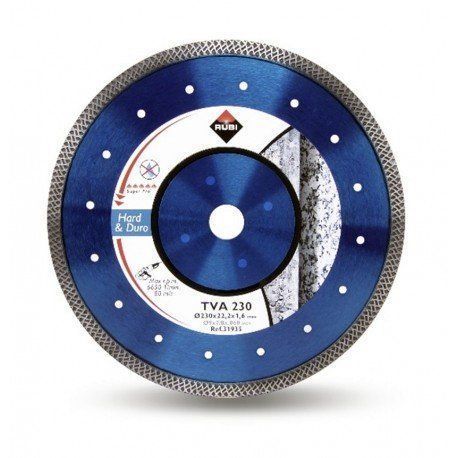
Abrasion Tools
The abrasive tools are devices that are able to wear down or destroy a softer material, exerting friction on it.
The cutting tool abrasion are made with an abrasive substance which is intended to act on other materials with different kinds of mechanical stress -triturado, penetration, cutting polished-. Its hardness is high and they are used in all types of processes, both handmade and industrial.
Types of Abrasive Materials

There are different types of abrasive materials depending on their hardness. Hardness is the most important property of this type of materials, and it is the ability it presents to resist alterations such as cutting, abrasion or scratching by another material.
One way to measure the hardness of a material is through the Mohs scale. In it, ten minerals are ordered according to their hardness and their ability to scratch other softer material. Thus, we find that the diamond represents the number ten of the scale. It is the hardest material of it and can only be scratched by another diamond.
1 Talc - Can be scratched easily with the nail
2 Plaster - You can scratch the nail with more difficulty
3 Calcite - Can be scratched with a copper coin
4 Fluorite - Can be scratched with a steel knife
5 Apatito - You can scratch hard with a knife
6 Ortosa - It can be scratched with a sandpaper for steel
7 Quartz - Stripe the glass
8 Topaz - Scratched by tungsten carbide tools
9 Corundum - Scratched by silicon carbide tools
10 Diamond - The hardest material on this scale (scratched by another diamond)
Abrasive materials can also be classified according to their origin. Thus, we find natural and artificial abrasive materials.
NATURAL ABRASIVE MATERIALS
These types of abrasive materials are extracted from nature itself. Among them we find different minerals from least to greatest hardness according to the Mohs scale, such as:
Quartz
The quartz is also known as silica sand . Its hardness on the Mohs scale is 7. It is a cheap material, so it is also one of the most used to manufacture abrasion cutting tools such as discs, sandpaper, etc.
Garnet
The Garnet or almandita has different varieties. Its hardness on the Mohs scale is 7.5-8. It is usually used to make sandpaper used in woodwork.
Emery
It is one of the most used abrasives. It is a rock composed of aluminum oxide and traces of iron, chromium, titanium, manganese, nickel, silicate and vanadium. From it you get abrasive powder that is used to make tools for cutting, grinding, metal polishing, etc. Its hardness on the Mohs scale is 9.
Diamond
The diamond is considered the hardest material known and its classification on the Mohs scale is 10. Its use in the industry is widespread when it comes to manufacturing powerful abrasion cutting tools.
SYNTHETIC ABRASIVE MATERIALS
Synthetic abrasive materials are those made from different raw materials mixed with chemical reagents. They give rise to materials with a high hardness such as:
Aluminum oxide
The aluminum oxide or corundum is one of the most used to make abrasive tools. It is a material of long duration and great hardness (9.2 in Mohs scale). It can be split by exerting pressure on it, producing new sharp edges. It is a material that is recommended to work with soft materials.
Silicium carbide
The silicon carbide or carborundum is achieved with a mixture of silica sand, salt, sawdust and residual petroleum coke. It is processed at high temperature in an electric oven and a mass of crystals of hardness 9.6 on the Mohs scale is achieved.
Its fracture index is very high, making it a perfect cutting abrasive to make fine finishes on stone and other hard materials. Silicon carbide is used to make metal cutting discs, sandpaper or emery pastes, among other things.
Cubic boron nitride
The cubic boron nitride is achieved by subjecting hexagonal boron nitride at high pressures and temperatures. One of its main characteristics is its good heat stability and its great hardness. When used to work iron, this abrasive material does not produce chemical reactions.
It is used to manufacture abrasion cutting tools used to machine steels and cast iron.
Synthetic diamond
The synthetic diamond can have the same level of hardness as the natural diamond. However, this abrasive material cannot be used in works with ferrous alloys at high speeds, since the carbon it contains is soluble in iron at high temperatures.
Comments
Post a Comment